


Preparing Your Board for Off-Season Storage
Cleaning and Drying
Before storing your paddle board, give it a thorough clean to remove any salt, dirt, or debris. Allow it to dry completely to prevent mold or mildew growth during storage. Do the same for all your accessories.
We recommend using a pH-neutral eco-friendly soap to properly wash the paddle board.
Inspect for Damage
Check your board for any cuts, abrasions, or slow leaks before storing. It's much better to repair issues now than to discover them at the start of next season.
Where to Store Your Board
The ideal storage location has:
- Stable temperature — avoid extreme heat or cold
- Low humidity — prevents mould growth
- No direct sunlight — UV degrades PVC over time
- Protection from rodents — mice will chew through PVC
A climate-controlled basement or indoor closet is ideal. Avoid unheated garages, outdoor sheds, and car trunks.
Rolled vs. Inflated Storage
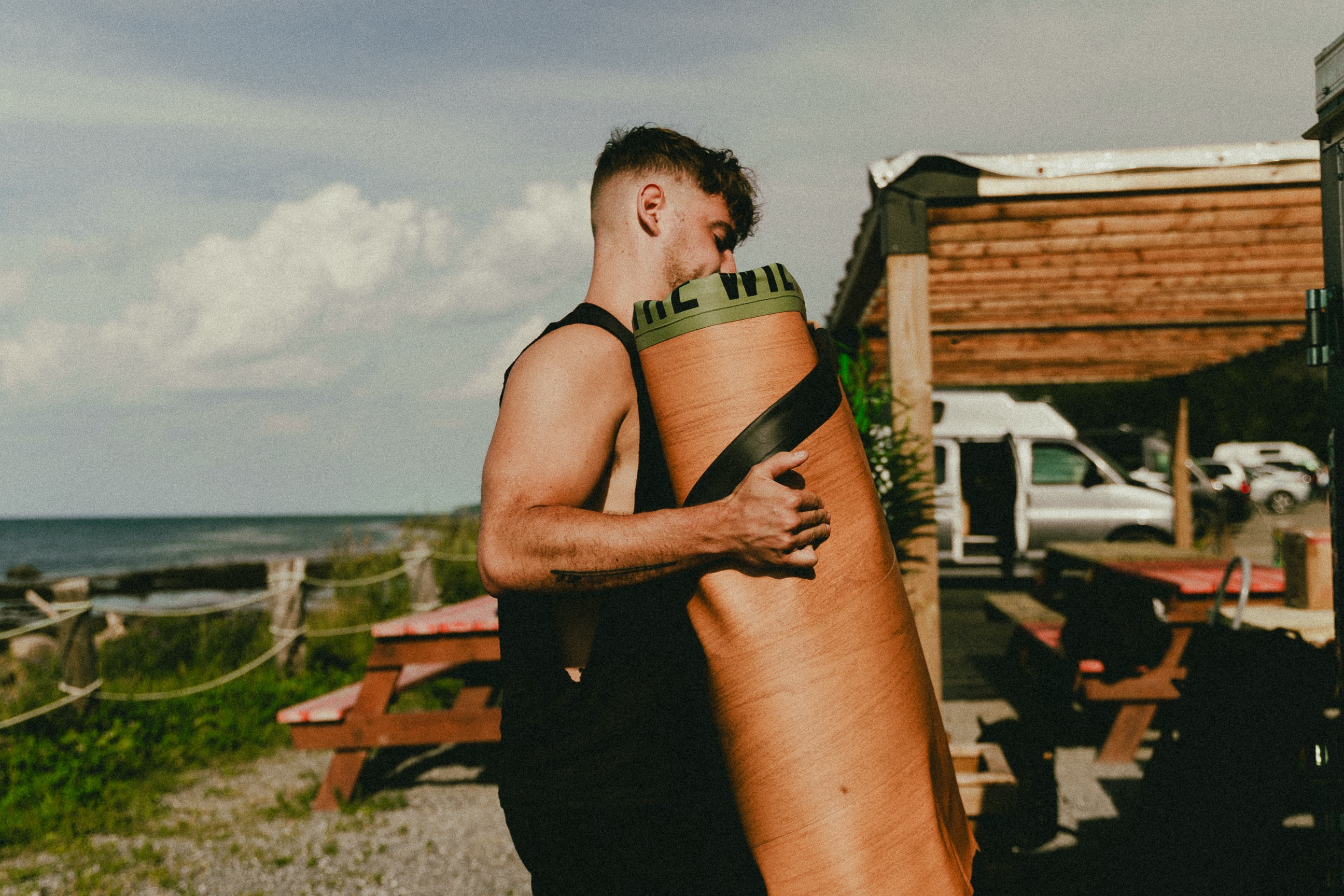
If you have the space, storing your board slightly inflated (3-5 PSI) is the best option. This prevents permanent fold creases and is easier on the material.
If you need to store it rolled:
- Roll loosely — don't compress it as tightly as you would for transport
- Unroll and re-roll every 4-6 weeks to prevent permanent creases
- Alternate your fold direction each time
If storing rolled in the bag, leave the bag partially unzipped to allow air circulation and prevent moisture buildup inside.
Winter Storage
Winters present unique challenges for paddle board storage:
- Extreme cold makes PVC brittle — never unroll or inflate a board in sub-zero temperatures
- Temperature fluctuations in garages cause condensation — moisture trapped in a sealed bag leads to mould
- Bring your board indoors if possible, even a basement corner works perfectly
Athabasca Inflatable SUP
Built with military-grade PVC to withstand Canadian conditions. Adventure-ready with carry bag included.
Shop NowSpring Checklist Before Your First Paddle
Before your first session of the season:
- Inflate to full PSI and let it sit for 24 hours — check for slow leaks
- Inspect all seams, the valve, deck pad, and D-rings
- Check your accessories — pump, paddle, leash, and fins
- Clean the board if there's any dust or residue from storage


